

Did you know? Inspired by Brady J Crytzer “The National Road: George Washington and America’s First Highway West”
The idea for the National Road dates back to George Washington’s trail clearing from Braddock’s Road to help support the troop movement and supply lines in the French and Indian War. Washington envisioned connecting East and West across the Appalachian Mountains connecting the Potomac and Ohio Rivers
The initial build of the National Road followed Braddock’s Road from Cumberland MD to Wheeling WV. It was the first road created and owned by the Federal government. Congress legislated that the base of the road be constructed with 7 inch stones and the top layer 3 inch stones which had to be individually measured for compliance.
When the National Road was continued beyond Wheeling, it was designed to pass through the capitals of Columbus, Indianapolis, and Vandalia (the capital of Illinois was later moved to Springfield)
Unlike the construction of the National Road westward from the Potomac to Wheeling, in Indianapolis the road was simultaneously built toward Richmond in the East and Terre Haute in the west. A barge carrying a shipment of stone became stuck on a sandbar in the White River. After 3 days of no progress from the federal troops, the residents of Indianapolis took it upon themselves to unload the stone and continue building the road.
The National Road was lined with taverns for food and lodging on average about a mile apart. Those traveling in Conestoga wagons could move at about 4 miles per hour and cover 7 miles a day. The more well-to-do traveled by stagecoach drawn by teams of 4 horses. The teams of horses could ride at 7 miles per hour and could be traded out with a fresh team every two hours.
The phrase “will be there with bells on” comes from early travel on the National Road when the Conestoga wagons would be outfitted with a set of bells on each side of the wagon: to warn others of the approach and to be given to those who would assist you in the case of an accident, breakdown or stuck. Those fortunate enough to finish their trip safely would arrive with bells on.
The National Road was both too early and too late. The road was constructed too late to be almost immediately made obsolete by canals and railroads, and too early for the use with automobiles.
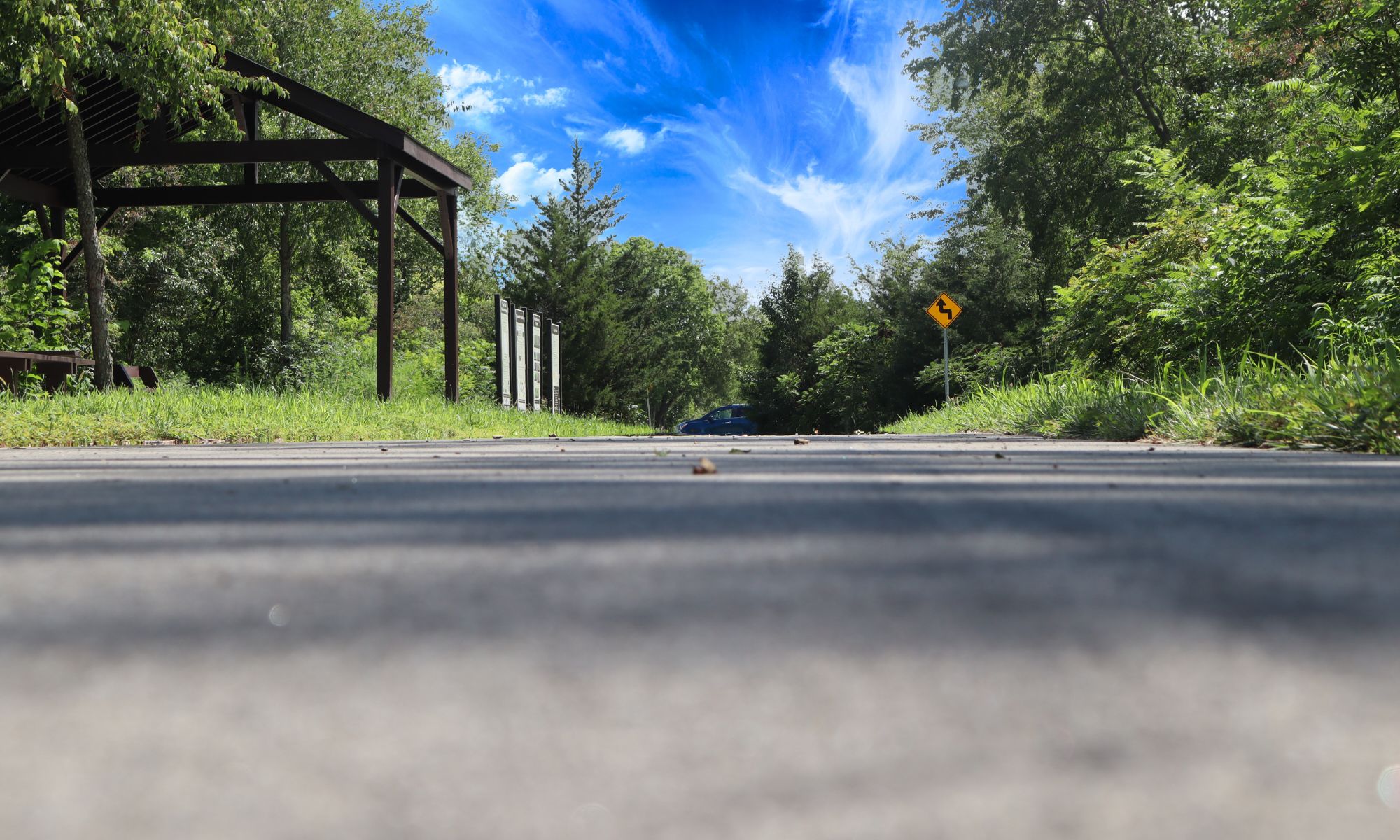
The Pennsy Trail in Hancock County is part of the National Road Heritage Trail constructed along the railbed of the Pennsylvania Railroad. The NRHT traverses 8 counties and is more than 50% completed to provide a cross-state multiuse path from Terre Haute to Richmond in close proximity to the National Road US 40. See maps at www.pennsytrails.org/maps/ and www.NRHT.org
Article written by Paul Galley
Based on The National Road, by
https://www.amazon.com/National-Road-Brady-J-Crytzer-ebook/dp/B0FFTNKX6S
